The Ultimate Guide to Choosing the Right Size Fiberglass Pool for Your Backyard
Choosing the right fiberglass pool size is one of the biggest make-or-break decisions you will make. It affects how your backyard works, how safe the pool area feels, and how often you use it.
For Grand Strand homeowners, the right size also needs to match coastal lot realities like tighter yards, HOA expectations, drainage planning, and outdoor living space that gets used for much of the year.
This guide is designed to answer the sizing questions people type into Google, including how to find the right size pool (Match the pool to your yard space, access, and how you will use it.) and how much room do you need for a pool (You need space for the shell plus safe decking, fencing, and circulation.)
It also clarifies what shoppers often mean when they search for best-rated fiberglass pools (A well-built pool that fits the yard, feels comfortable, and is easy to maintain.) and even the largest fiberglass pool options (The biggest size that still leaves room for deck space and a functional backyard.)
Start With the Real Sizing Question: How Will You Use the Pool?
The fastest way to choose the right size is to decide how you want the pool to function day to day. Some homeowners want a place to cool off, float, and relax. Others want space for kids to play, for friends to gather, or for exercise swimming.
If you define your top use case first, it becomes much easier to filter out sizes that look impressive but do not fit your life. This is the foundation of how to find the right size pool, and it prevents most sizing regret.

Small Vs. Large Pools: What Works Best in Grand Strand Backyards
Small and mid-size fiberglass pools are often the best fit for Grand Strand yards because they keep the rest of the property usable. Many homeowners do not want a pool that consumes the entire backyard. They still want a patio that feels open, a place for furniture, and clear walking space that does not feel tight or unsafe.
A smaller pool can still feel premium with smart features like built-in seating and a tanning ledge. Many homeowners use smaller pools more often because they feel easy and comfortable.
Larger fiberglass pools are better for open swimming space, games, and entertaining. The tradeoff is that big pools require more room for decking and traffic flow. If the pool is oversized for the yard, the deck feels cramped and the backyard feels crowded.
The right size is the one that keeps the entire backyard functional.
Yard Layout Comes First, Then Pool Size
In Murrells Inlet and neighboring towns, yard layout frequently decides the best pool size more than wish lists do. Some properties have limited side-yard access, narrow buildable areas, or constraints from utilities, easements, or setbacks. These factors can limit which pool sizes are practical without introducing unnecessary complications.
Outdoor living also matters here. Many homeowners want the backyard to feel like an extension of the home, not just a pool surrounded by leftover concrete. If you love entertaining, grilling, or lounging, your pool should leave room for those zones to exist comfortably.
Drainage and grading can also influence sizing decisions, especially in coastal and near-coastal conditions. The goal is a pool plan that leaves room for responsible water management around the deck and yard, so the space holds up well over time.
How Much Room Do You Need for a Pool?
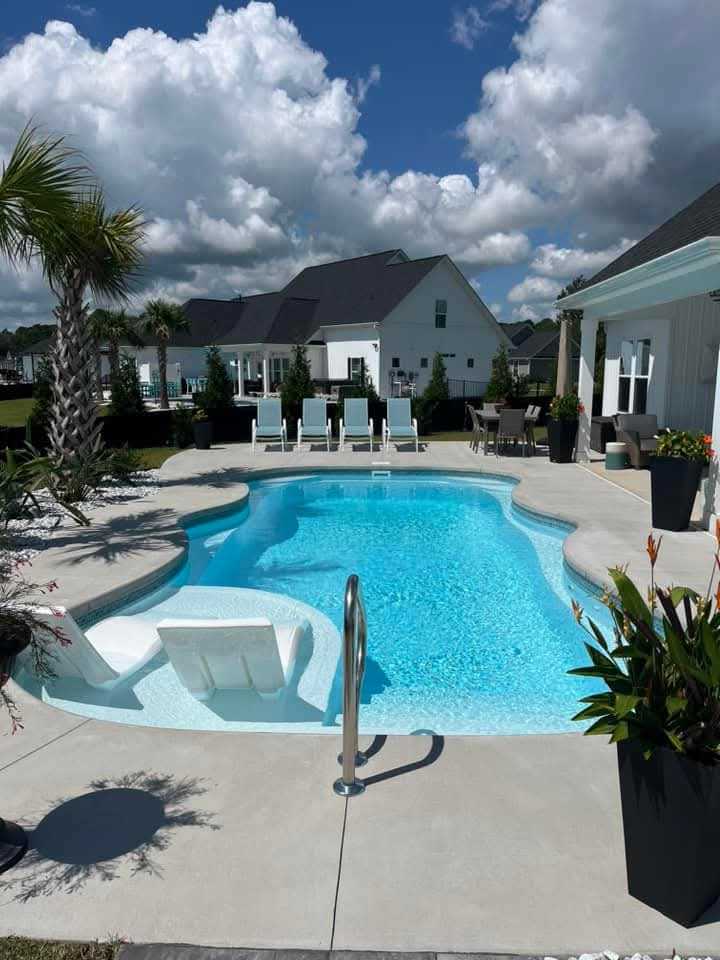
When people ask how much room do you need for a pool, they often mean the pool shell dimensions. But the real answer is that you need space for the entire pool zone.
That includes the fiberglass shell plus comfortable deck space, safe walking paths, and room for a fence or enclosure. It also includes space for how you will live around the pool, such as seating areas, a dining spot, and clear routes from the house to the pool without tight squeeze points.
A pool that barely fits can become frustrating, even if the water looks great. A pool that fits well feels open and easy to move around. That is usually the difference between a pool you love and a pool that feels like it took over the yard.
Safety and Size Are Connected
Safety is not only about fencing and rules. Pool size and placement impact safety more than many homeowners expect.
A pool should have clean sightlines from the house and primary patio areas. If a pool is pushed too tightly into a corner or hidden behind landscaping, it can reduce visibility. Clear lines of sight are especially important for families and for homeowners who host guests often.
Entry design also matters. Steps, benches, and ledges influence how easily people can get in and out of the water and where they can rest. Sometimes a slightly smaller pool with a better entry layout is safer and more usable than a larger pool with awkward transitions.
A properly planned barrier is essential. Your size choice should leave enough space for a fence layout that functions, including gates and clear walking space around the pool zone.
Usability: The Best Pool Size Is the One You Use Most
A pool can be impressive and still not feel enjoyable if it does not match how you live. If your household spends most pool time talking, floating, and cooling off, you may want a layout that prioritizes lounging features and open deck space rather than maximum length.
If you want more active swimming and games, you may prioritize more uninterrupted water. If exercise swimming is the goal, length and openness start to matter more, and the surrounding deck should still support safe, comfortable movement.
Do you want a low-maintenance pool? Automation is one of the top trends in fiberglass pools, so keep this in mind when choosing your design.
Shape plays a major role in how a pool feels at a given size. If you are comparing options that feel longer, wider, or more open, explore different profiles and how they impact deck flow in Fiberglass Pool Shapes.
What Best Rated Fiberglass Pools Usually Means
When people search for best rated fiberglass pools, they are often looking for the best overall experience, not just a brand name. In practical terms, that usually means a pool that fits the property well, has an easy entry, supports everyday use, and looks proportionate to the home and yard.
In many Grand Strand yards, the best experience comes from choosing a size that preserves outdoor living space. The best pool is often the one that makes your backyard feel better overall, not the one that leaves you with no room to enjoy the space around it.
See Fiberglass Pool Shapes and Prices in Conway, SC
Permitting In the Grand Strand: Where to Check Requirements
Permitting rules vary by municipality, so it is smart to review local requirements early. This helps you plan for fence and enclosure rules, setbacks, and site plan expectations before you fall in love with a size that creates complications.
The City of Myrtle Beach publishes a “Pool Submittal Requirements” document that outlines what is needed for a pool permit submission. City of Myrtle Beach Pool Submittal Requirements (PDF).
If you are outside city limits, Horry County also provides a central hub for permitting guidance. Horry County Permit Requirements.
Allstar Pool Company can help with the permitting process if needed and can guide you through planning a pool layout that supports a smooth approval path.
A Simple Way to Pick the Right Size, Without Overcomplicating It
First, decide your main use case. Then identify what parts of your backyard must remain functional, like a patio zone or lounge space. Next, plan for the full pool zone, not only the shell, including safe walking space and your fence layout.
Finally, compare one smaller option and one larger option against the same yard plan. Choose the one that keeps the whole backyard working, not just the water.
If you would like help narrowing down the right size for your property, reach out here: Contact Us.
Related FAQs
How long does a fiberglass pool installation usually take in South Carolina?
Timelines vary by permits, weather, access, and the amount of decking and landscaping. Many projects move quickly once approvals and scheduling are in place.
Can I add a heater to extend the swim season near the coast?
Yes. Many homeowners choose a heat pump to make spring and fall swimming more comfortable.
Are fiberglass pools compatible with saltwater systems?
Yes, if the salt system is properly sized and water chemistry is maintained.
What is the best way to reduce sand getting into a pool in beach communities?
Deck design, landscaping buffers, and a rinse-off routine help. Some homeowners also add a rinse station or outdoor shower area.
Should I choose a deep pool if I do not plan to dive?
Not necessarily. Many households prefer a layout that maximizes usable shallow and mid-depth areas for lounging and play.